15 Types of Counseling: Careers, Settings, and Specialties
Counseling supports mental health, personal growth, and life transitions by helping people work through emotional, behavioral, academic, and relationship challenges. If you are exploring counseling careers or trying to understand which specialty fits your goals, this guide explains 15 types of counseling and the settings where professionals in each area often work.
What Is a Counselor?
A counselor is a trained professional who helps individuals, couples, families, or groups navigate challenges and make meaningful changes. Counselors create a supportive environment where clients can explore their thoughts, emotions, and behaviors while building skills for coping, communication, and decision-making.
Depending on their training and licensure, counselors may work in schools, mental health clinics, rehabilitation centers, hospitals, community organizations, private practice, and other support-focused settings.
15 Different Types of Counseling
Counseling includes many specialties, each designed to support different populations and needs. Below is an overview of 15 types of counseling, along with the focus of each area.
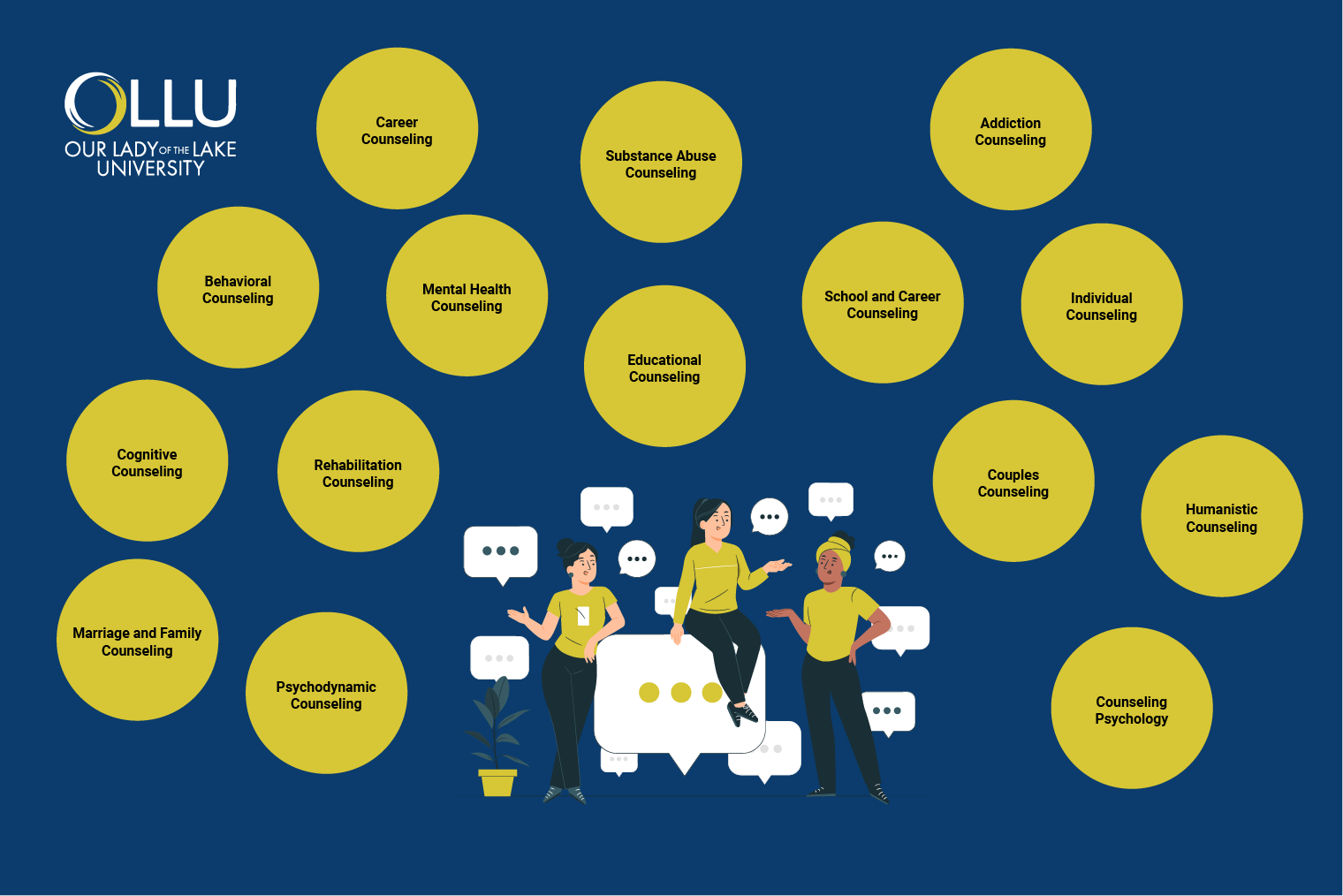
Marriage and family counseling
Marriage and family counseling focuses on helping couples and families improve communication, resolve conflict, and build healthier relationships. Professionals in this area often support clients through parenting concerns, family transitions, and relational stress.
Career counseling
Career counseling helps individuals identify strengths, interests, and goals related to work and professional development. Career counselors may assist with career exploration, job search strategies, resume development, and career transitions.
Rehabilitation counseling
Rehabilitation counseling supports individuals with disabilities as they pursue personal, educational, social, and vocational goals. This specialty often includes advocacy, resource coordination, and planning for independence and long-term success.
Mental health counseling
Mental health counseling helps individuals manage concerns such as anxiety, depression, trauma, stress, and behavioral challenges. Counselors in this area use therapeutic techniques to support emotional well-being and healthy coping strategies.
Substance abuse counseling
Substance abuse counseling focuses on helping individuals address substance use disorders and move toward recovery. Counselors may provide therapy, relapse-prevention support, education, and referrals to additional recovery resources.
Educational counseling
Educational counseling helps students navigate academic challenges, personal development, and educational decision-making. This work may include goal setting, study strategies, and support for school-related concerns.
School counseling
School counseling supports students’ academic, social, emotional, and college or career development in educational settings. School counselors often collaborate with teachers, families, and administrators to promote student success.
Couples counseling
Couples counseling helps partners improve communication, address conflict, and strengthen relationship dynamics. This type of counseling may focus on trust, intimacy, shared goals, or major life transitions.
Individual counseling
Individual counseling provides one-on-one support tailored to a person’s specific concerns and goals. It can help clients improve self-awareness, develop coping strategies, and work through personal challenges in a confidential setting.
Addiction counseling
Addiction counseling addresses the emotional, behavioral, and social effects of addiction and recovery. Professionals in this area help clients understand patterns, build healthier habits, and maintain long-term recovery strategies.
Counseling psychology
Counseling psychology focuses on emotional, social, and behavioral functioning across the lifespan. This area often overlaps with assessment, therapeutic support, and strategies that help individuals improve daily functioning and resilience.
Humanistic counseling
Humanistic counseling emphasizes personal growth, self-awareness, and the individual’s capacity for change. Counselors use empathy and a client-centered approach to help people better understand themselves and their goals.
Behavioral counseling
Behavioral counseling focuses on identifying and changing unhealthy behaviors while reinforcing healthier ones. This approach often uses structured interventions to support measurable behavior change.
Cognitive counseling
Cognitive counseling helps clients identify negative or unhelpful thought patterns and replace them with more balanced thinking. This approach is often used to improve emotional well-being and decision-making.
Psychodynamic counseling
Psychodynamic counseling explores how past experiences, unconscious patterns, and unresolved conflict may affect present thoughts, emotions, and behavior. It helps clients gain deeper insight into recurring challenges and relationship dynamics.
How to Choose a Counseling Specialty
Choosing a counseling specialty often starts with identifying the population you want to serve and the type of setting where you want to work. For example, someone interested in schools may pursue school counseling, while someone drawn to clinical settings may prefer mental health or rehabilitation counseling.
It is also important to consider licensure or certification requirements, degree pathways, and long-term career goals. Reviewing graduate programs can help you understand which specialization aligns with your interests and the communities you hope to support.
Counselor vs. Psychologist
Although both professions support mental and behavioral well-being, their education and scope of practice may differ. Psychologists often complete doctoral-level education, while many counselors complete master’s-level training and pursue licensure based on state requirements and specialization.
Advance Your Counseling Career
If you are ready to explore graduate preparation for counseling careers, OLLU’s Master of Arts in Counseling (MAC) offers specializations that prepare students to serve diverse populations in professional counseling settings.
The online MAC program includes pathways in Clinical Mental Health Counseling, Clinical Rehabilitation Counseling, and School Counseling, helping students build the academic foundation for counseling practice, certification, and licensure pathways based on their state requirements.
Frequently Asked Questions (FAQs)
What are the key skills required for counseling?
Key skills for counseling include active listening, empathy, communication, problem-solving, and emotional intelligence.
What factors should be considered when choosing a counseling specialty?
When choosing a counseling specialty, consider your interests, strengths, values, career goals, and the population you want to serve.
What are the differences between a counselor and a psychologist?
Psychologists typically have doctoral degrees and may provide assessment, diagnosis, and treatment, while counselors often hold master’s degrees and focus on counseling, support, and therapeutic interventions depending on licensure and state regulations.
What degree can help prepare you for counseling careers?
A graduate counseling degree such as the Master of Arts in Counseling (MAC) can help prepare students for professional counseling roles, specialized practice areas, and licensure pathways.